
Broken Torsion Springs
Torsion springs that give out on the first hard freeze lead the list. A spring already near the end of its life tends to finally go when sustained cold pulls the last of its tension.
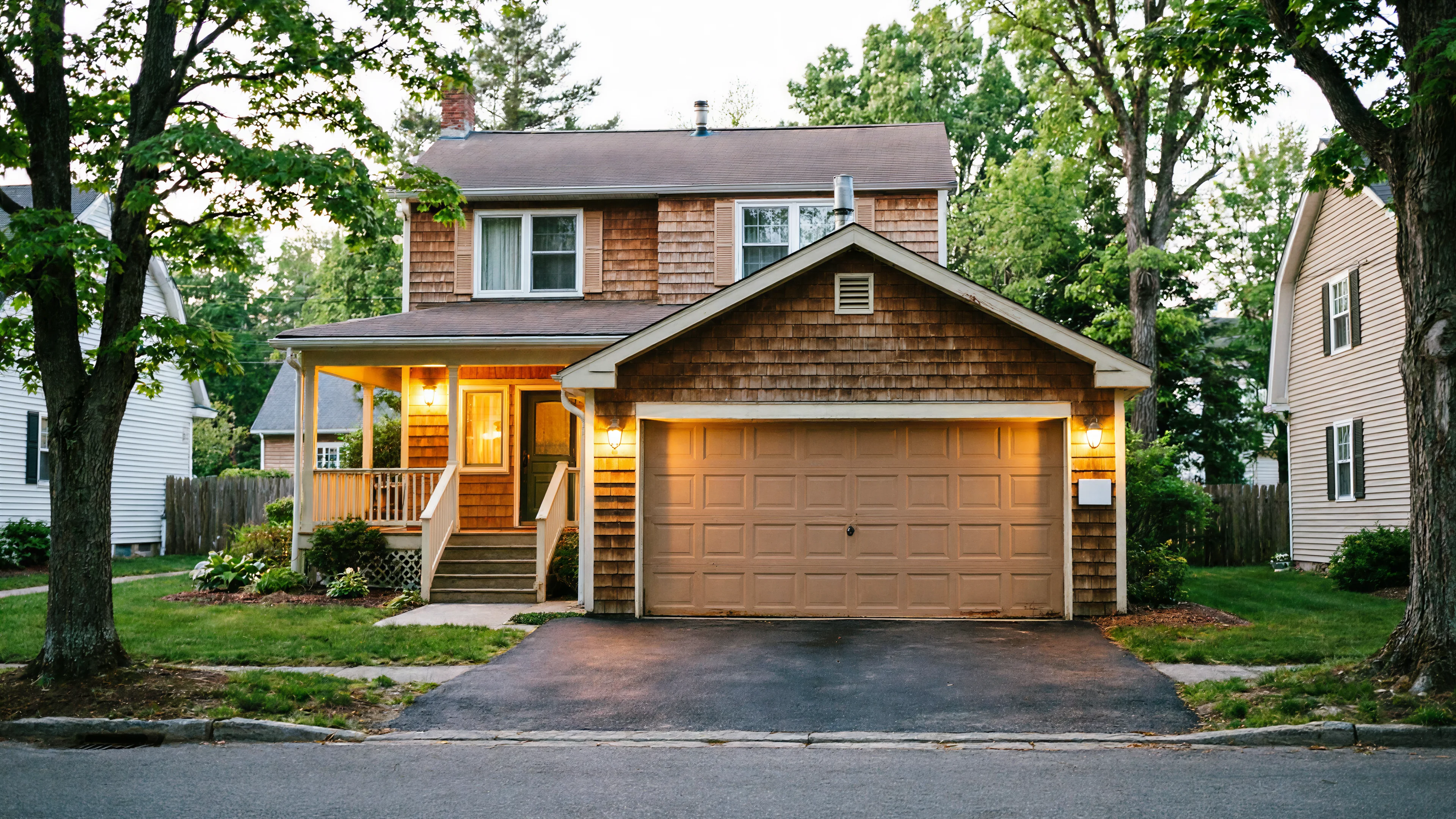
Local garage door service - Framingham, MA
Garage door repair in Framingham for springs, openers, panels, rollers, and tracks across Ashland, Natick, Sudbury, Wayland, and nearby towns.
Garage door services
From emergency repair and new door installation to maintenance, opener repair, panel replacement, roller replacement, and general garage door service, the lineup is built around Framingham's 1938-1993 housing stock and the original 1960s-70s torsion hardware still hanging on many headers here.


Common Framingham garage door problems
Given the cold, severe climate band this area sits in, the most common calls are broken torsion springs that give out on the first hard freeze, and openers that start struggling once grease thickens in low temperatures. Second most common are rollers and tracks that have iced and warped over years of a door sitting wet at the base through our weather. We also see a steady run of cable failures on the older extension-spring setups still found on houses from the 1960s and 70s stock across this service area. What we don't see much of, frankly, is anything exotic - this is mostly older hardware doing what older hardware does in a cold climate, year after year.
Torsion springs that give out on the first hard freeze lead the list. A spring already near the end of its life tends to finally go when sustained cold pulls the last of its tension.
Openers start struggling once grease thickens in low temperatures. The motor fights a door that has gotten harder to move, and that is when a marginal opener shows itself.
Rollers and tracks ice and warp over years of a door sitting wet at the base through our weather. The movement gets rough and the door starts binding in its channel.
We see a steady run of cable failures on the older extension-spring setups still found on houses from the 1960s and 70s stock across this service area.
What we don't see much of is anything exotic. This is mostly older hardware doing what older hardware does in a cold climate, year after year, in predictable ways.
Clear repair guidance
We don't post a flat price list, because what's driving the cost on a 1968-era door in this area is rarely the same thing twice. Spring size, track condition, whether the opener is original or already replaced, whether the header needs reinforcement - all of that varies house to house even on the same street.
The layered history of this older stock is part of why. A door installed during a 1968 build has likely been replaced once already, maybe twice, and whatever's hanging on your header now is usually a mix of eras: original track, a newer opener bolted on in the '90s, a spring somebody swapped after it broke on a cold morning. Each of those pieces prices out on its own.
Median household income in this service area runs around $141,440, and most of the jobs we do reflect homeowners who'd rather pay for a repair done right once than cut corners on a house they plan to stay in.
We give you the number after we've actually looked at the door, not before. That's the honest way to quote a door whose real condition you can't know over the phone.
Local housing matters
1968Median local build year:
Serving Framingham, MA
Walk most streets in Framingham and the houses you pass went up between 1938 and 1993, with the median landing around 1968. That's a Cape or split-level with a single-car or two-car attached garage, built when steel torsion springs and extension-spring setups were standard and nobody was thinking about insulated panels.
Across the 74 named areas we cover - from the neighborhoods near Ashland and Cochituate to the Sudbury and Wayland line - the stock is overwhelmingly 1960s and '70s construction. That matters because a door installed during a 1968 build has likely been replaced once already, maybe twice, and whatever's hanging on your header now is a mix of eras: original track, a newer opener bolted on in the '90s, a spring somebody swapped out after it broke on a cold morning.
We see that layered history on almost every service call in this area. If your garage door still has the steel roll-up panel with the horizontal ribbing common to that period, you're not imagining it - that's the house talking.
Cold-weather garage door wear
Framingham sits in a cold, severe winter climate band, so sustained cold and repeated freeze cycles tend to expose existing spring fatigue, thickened opener grease, iced and warped tracks, and worn seals rather than temperature alone causing failure.
Torsion springs lose tension faster in sustained cold. A spring already near the end of its cycle life tends to finally give out on the first hard freeze of a Framingham winter.
Openers start struggling once grease thickens in low temperatures, so an opener that was marginal in summer shows its age when the cold sets in.
Rollers and tracks ice and warp over years of a door sitting wet at the base through our weather, adding resistance the whole system has to fight.
When panels warp enough that the door no longer seals against our winters, the draught is the real problem - and patching a spring doesn't solve it.
What to expect
We come out, look at the door and the opener together rather than just the symptom you called about, tell you what's actually wrong before we touch anything, and do the work on site once you approve it.
You tell us what the door is doing or not doing, and we schedule a visit - most repair calls here get a same-day response.
On site we look at the door and the opener together, not just the symptom you called about, and tell you what's actually wrong before we touch anything.
Given how much of the housing here dates to the 1938-1993 range, a lot of what we find is original hardware mixed with newer parts installed piecemeal over the decades, so diagnosing it properly takes a few extra minutes most companies skip.
Once you approve the work, we do it on site, with pricing agreed before we start rather than after the door's apart.
Older Torsion Setups May Need Ordered Parts
One honest limitation: some replacement parts for older torsion setups aren't something we keep on every truck, and if your door needs a part that's no longer common, that can mean a short wait rather than a same-day fix.
Repair or replace?
Not every call ends in a repair, and we'll tell you when it shouldn't. A door from the 1960s or '70s stock common here often has several things failing at once - but a spring break on an otherwise solid door is almost always worth fixing. We make that call on site, not over the phone.
A door from this older stock often has a bent track, rusted hinges, and a dying opener all at once. Fixing one piece just exposes the next failure a few months later.
If the panels are warped enough that the door won't seal against our winters, patching the spring doesn't solve the actual problem. The door itself has reached the end.
A torsion spring break on an otherwise solid door - even an older one - is almost always worth fixing rather than replacing. One isolated failure doesn't condemn a sound door.
We'd rather say it up front than bill you three times for the same symptom. Every door in this older housing mix is a little different, so the call is made at the door, not over the phone.
1938-1993 garage door systems
Framingham's 1938-1993 build range means garages can combine the steel torsion and extension-spring setups standard when the house went up, uninsulated steel roll-up panels, and opener and spring parts layered on over decades of piecemeal fixes.
These houses were built when steel torsion springs and extension-spring setups were standard. Both are still in service across the area, and they take different hardware and handling.
The steel roll-up panel with horizontal ribbing common to that period was built when nobody was thinking about insulated panels, which is why draughts and sealing come up so often here.
Whatever's on your header now is usually a mix of eras: original track, a newer opener bolted on in the '90s, and a spring swapped after it broke on a cold morning.
The typical house here is a Cape or split-level with a single-car or two-car attached garage, so openings and framing follow the patterns of that postwar building era.
Built around Framingham garage doors
With original hardware mixed with newer parts installed piecemeal over the decades, the visible door, spring system, opener, and tracks on a Framingham home may all be from different eras - so we inspect the whole system before matching or ordering any part.
We look at the door and the opener together rather than just the symptom you called about, checking the real condition of each piece before anything is ordered or matched.
A lot of what we find is original hardware mixed with newer parts added over the decades, so diagnosing it properly takes a few extra minutes most companies skip.
A spring break on an otherwise solid door, even an older one, is almost always worth fixing rather than replacing, so we don't condemn a sound door over one isolated failure.
Some parts for older torsion setups aren't on every truck. If your door needs a part that's no longer common, we tell you up front that it may mean a short wait.

Service areas
We're based in Framingham and run trucks across the surrounding towns rather than keeping a storefront in each one. Our service area reaches the nearby towns within roughly a ten-mile radius, from the neighborhoods near Ashland and Cochituate out to the Sudbury and Wayland line. That footprint takes in Ashland, Cochituate, Southborough, Natick, Sudbury, and Wayland, along with Holliston and Marlborough and the other towns inside that radius. Most of them share the same older housing profile Framingham has, so the doors we find out there tend to be the same 1960s and '70s stock with the same layered, cold-weather wear.
Pick the town closest to you to see the local detail, or just tell us where you are and what the door is doing - we'll let you know how soon we can get a truck to you.
From our Framingham, MA base we run trucks across the surrounding towns rather than keeping a storefront in each one. These are the areas we serve most often - pick yours to see the local detail.
Questions
Most houses in this service area were built between 1938 and 1993, with the median around 1968, so a lot of the original garage doors and hardware from that era are still in place, sometimes with a replaced opener or spring layered on top. Age itself isn't a problem, but it does mean parts and conditions vary a lot house to house.
Yes, our service area includes nearby towns such as Ashland, Cochituate, Southborough, Natick, Sudbury, and Wayland, along with other towns within roughly a ten-mile radius.
This area sits in a cold, severe climate band, and torsion springs lose tension faster in sustained cold. Combined with the age of a lot of the hardware here - much of it dating to the 1960s and '70s - winter is when a spring that's already near the end of its life tends to finally go.
Not always. If the track is bent, the panels are warped, and the opener is failing at the same time, patching one part just means another fails soon after. We'll tell you honestly when replacement makes more sense than another repair.
Ready when you are
Tell us what the door is doing and we'll help you sort it out in Framingham.